A Storage Organiser Design Journey
Bevan Chiu is a Mechanical Engineering graduate from UC Irvine with a passion for CAD design, problem-solving, and additive manufacturing. As part of his journey towards becoming a PrintLab Certified Designer, Bevan completed the Storage Organisers project, documenting his design process from initial ideas through to a functional 3D printed solution. In this article, we take a look at how he approached the challenge, developed his concept, and refined his design through CAD development and iteration.
15th June 2026 • Case Studies
Defining Requirements and Exploring Ideas
PrintLab’s Storage Organisers project challenges learners to design and make a custom storage solution for a collection of objects and a defined space. Along the way, learners explore different storage techniques, develop CAD skills, and refine their ideas through prototyping and iteration.
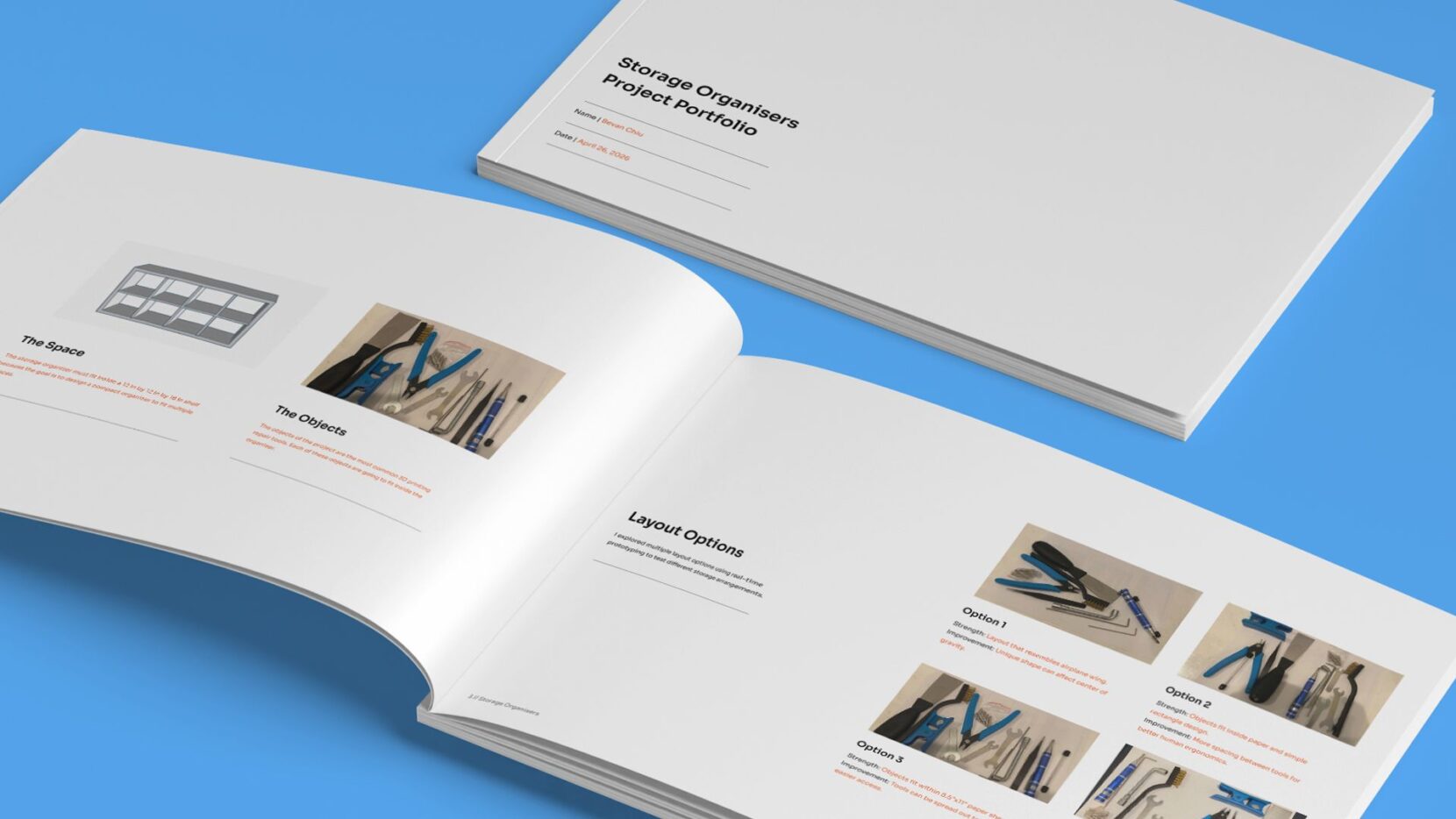
For his project, Bevan focused on organising a collection of common 3D printing maintenance tools within a compact shelf space. Before generating ideas, he first defined the available boundary and identified the collection of tools that needed to be organised.
With these requirements established, Bevan began exploring different layout concepts using PrintLab’s real-time prototyping approach. Rather than moving straight into CAD, he physically arranged the tools within the available space, documenting each configuration with photographs and reflecting on factors such as accessibility, stability, and space efficiency. By repeating this process and generating multiple concepts, he was able to compare different approaches before progressing to the next stage of development.
Idea Selection and Planning
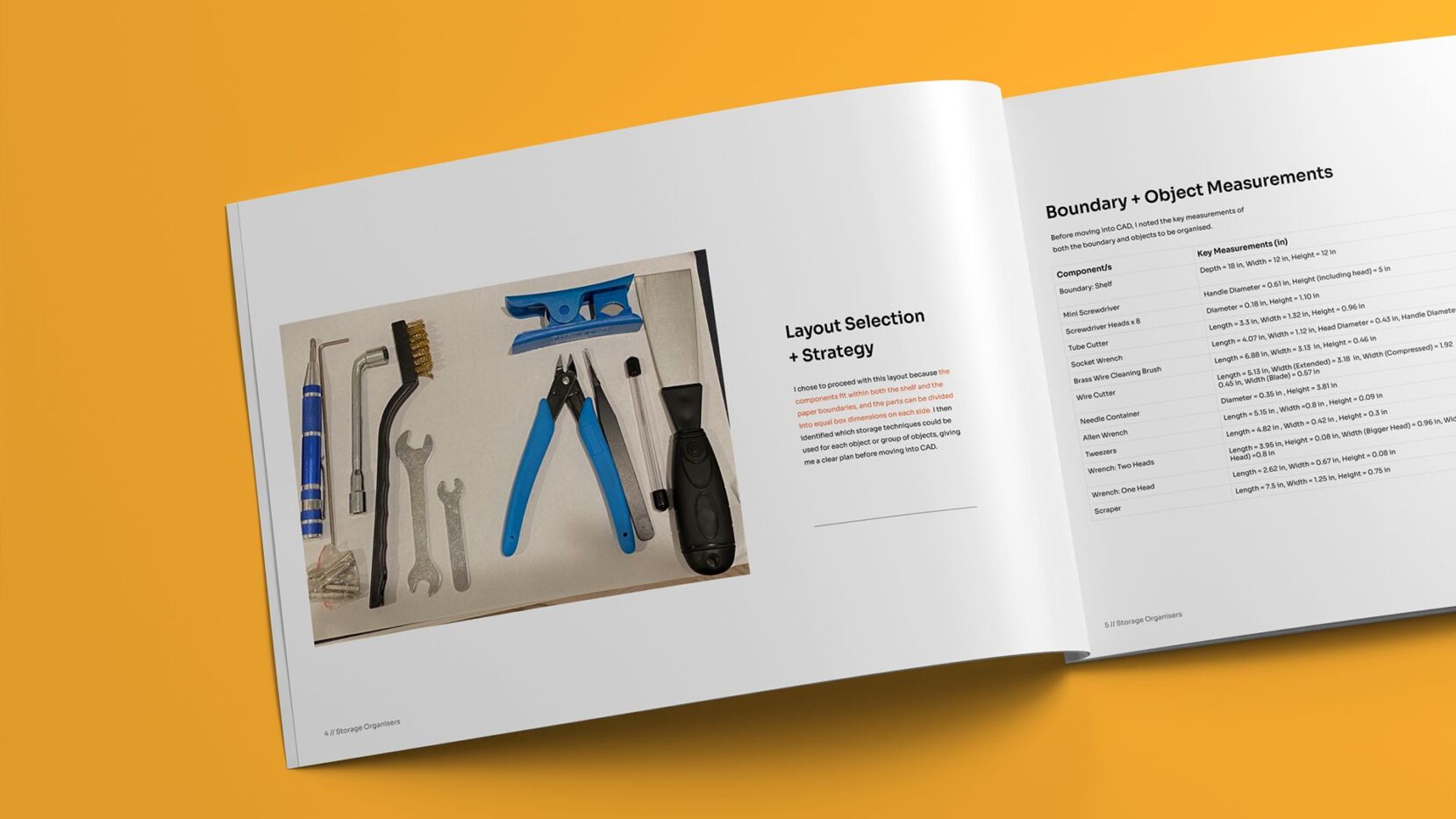
After comparing his layout concepts, Bevan selected the arrangement that best met the project requirements. His chosen layout allowed the tools to fit within both the shelf boundary and the paper layout, while dividing the organiser into clear sections for different groups of objects.
With a direction selected, Bevan then moved into a planning stage before opening CAD. He identified how the tools could be grouped, considered which storage approaches might suit each object, and recorded key measurements for both the shelf and the individual tools. This gave him a clearer framework for modelling the organiser accurately in the next stage.
CAD Development and Iteration
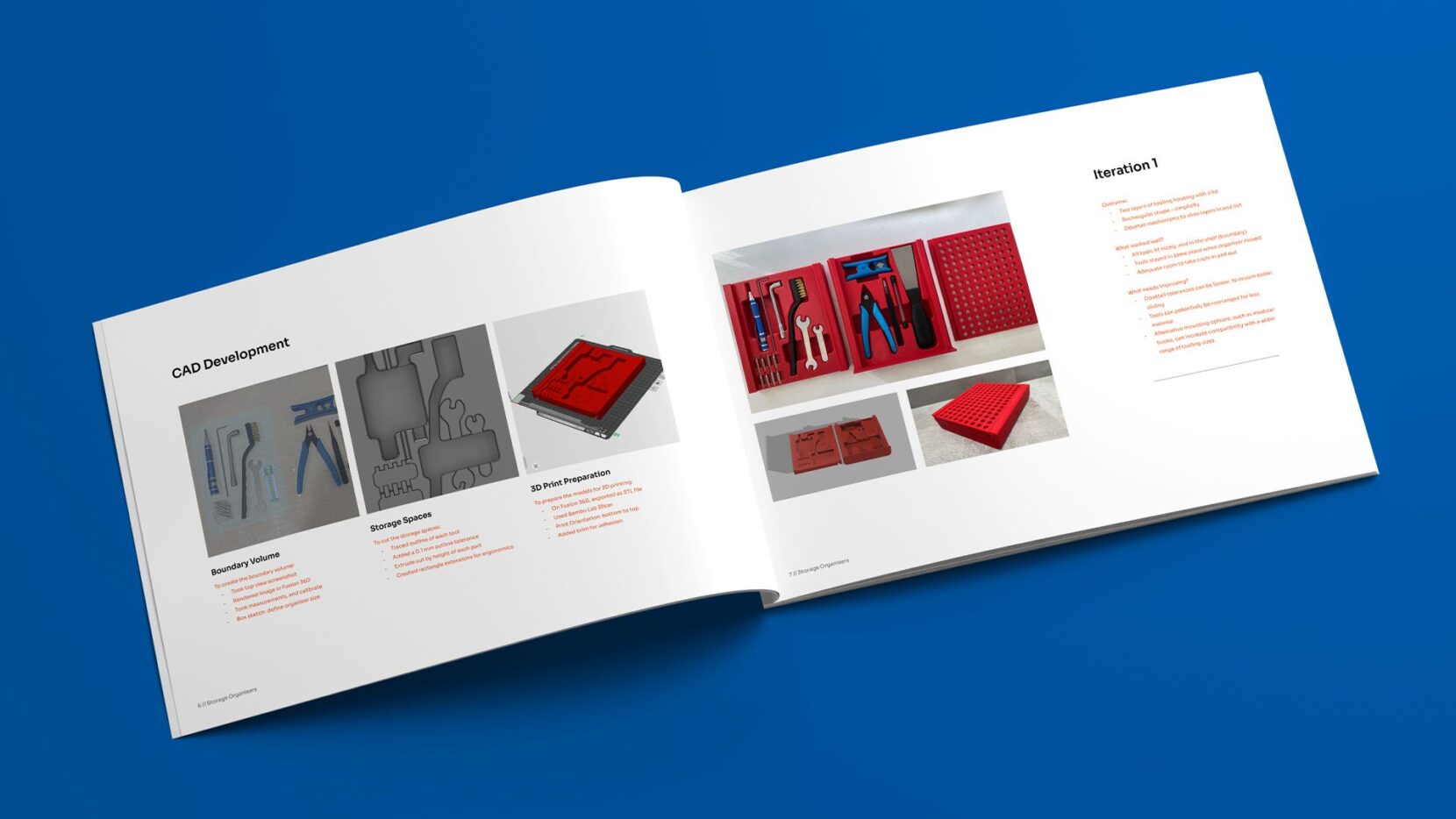
With a clear plan in place, Bevan began translating his ideas into CAD. Using the measurements gathered during the planning stage, he first created a boundary volume representing the available shelf space before developing storage features tailored to the different tools. By modelling directly from his chosen layout, he was able to maintain the organisation established during the earlier stages of the project while refining the design for manufacture.
Once the initial model was complete, Bevan prepared the design for 3D printing and produced a first prototype. Testing the organiser revealed several strengths, including secure storage for the tools and effective use of the available space. The prototype also highlighted areas for improvement, such as the dovetail connection and opportunities to increase flexibility through additional storage options. By evaluating the first version and documenting these observations, Bevan was able to identify how the design could be refined and developed further.
From Concept to Final Product
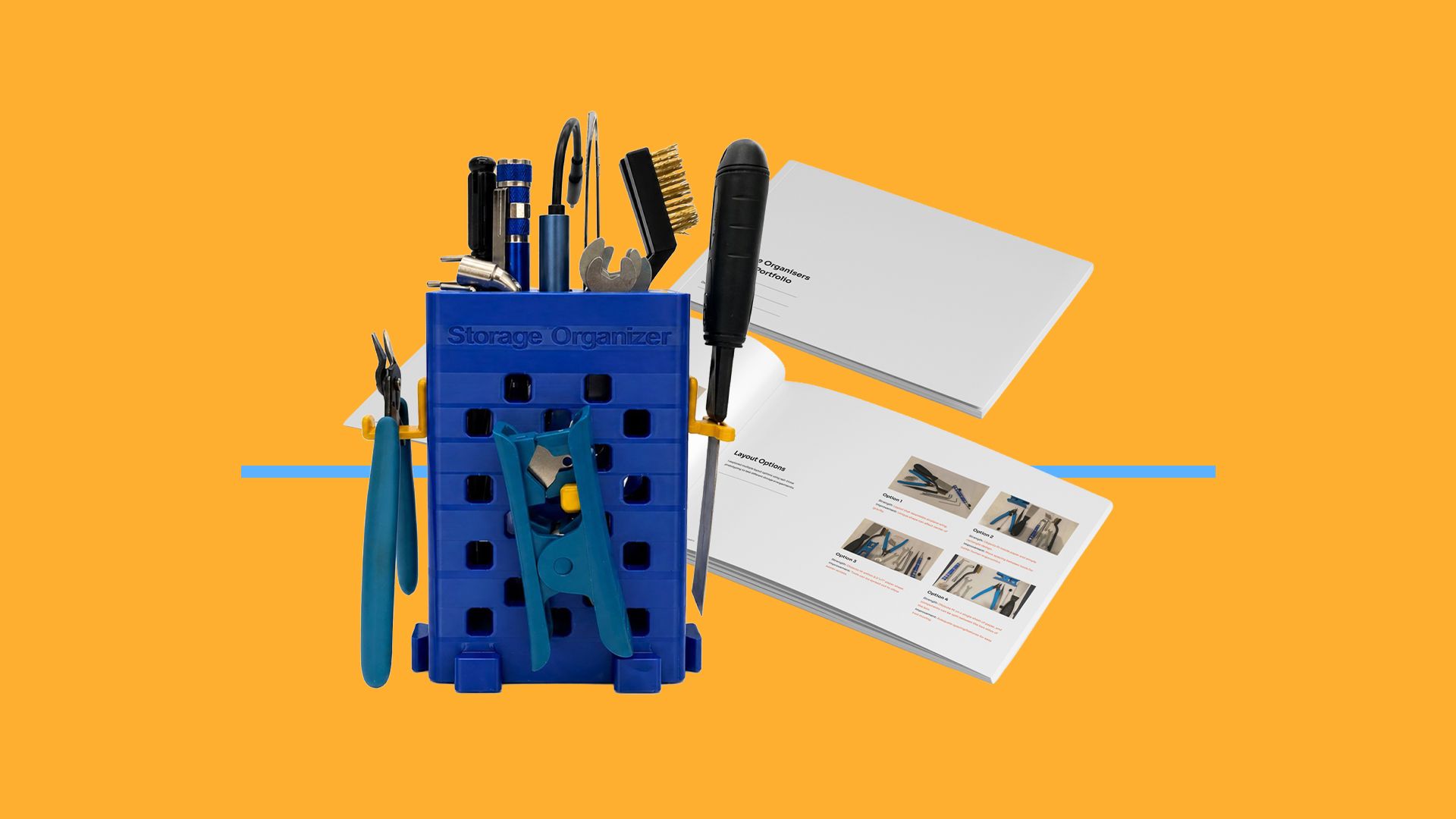
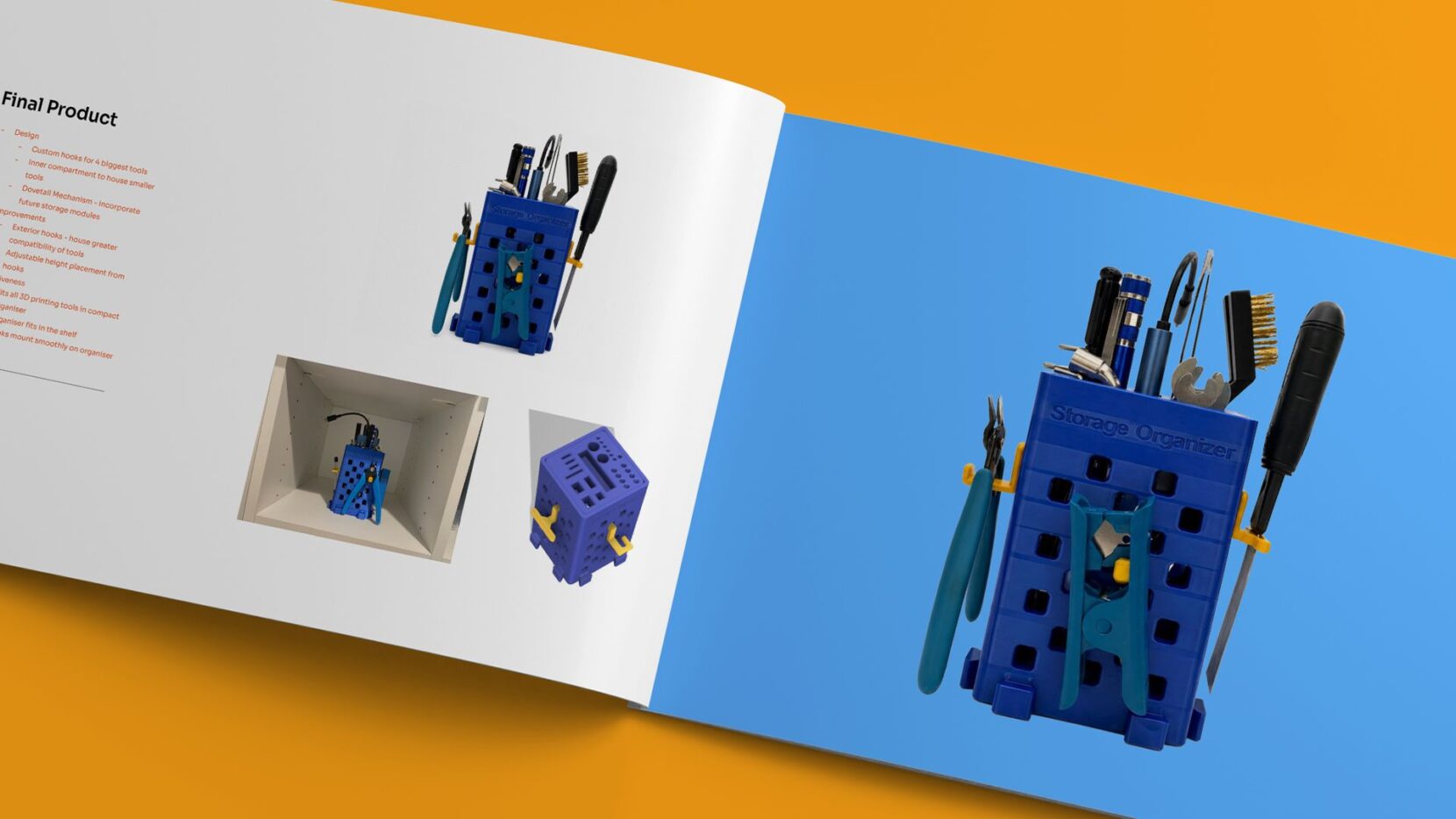
The final organiser demonstrates how a structured design process can transform a collection of loose tools into a practical and well-organised storage solution. Drawing on the insights gained throughout the project, Bevan developed a compact organiser that securely stores a range of 3D printing maintenance tools while making them easy to access when needed.
Interestingly, the final design differs significantly from the concepts explored at the beginning of the project. While the early layouts focused on organising tools within a flat shelf space, the design evolved into a more compact, vertical solution with interchangeable hooks and modular storage features. This demonstrates how exploring ideas, testing concepts, and remaining open to change can lead to stronger design outcomes.
One of the most distinctive features of the organiser is its modular approach. In addition to dedicated storage spaces, the design incorporates interchangeable hooks and a dovetail connection system, allowing it to be adapted and expanded over time. The result is a flexible storage solution that not only meets the project’s requirements, but also leaves room for future improvements and customisation.
More Than a Final Product
Rather than creating a generic storage solution, Bevan designed an organiser specifically for his own collection of 3D printing maintenance tools and the shelf space available to him. By documenting each stage of the process, from early layout exploration through to CAD development and prototyping, his portfolio shows how a personalised design can evolve through testing, reflection, and iteration into a practical final product.
This same design process is guided through the Storage Organisers project on the PrintLab learning platform, where learners are encouraged to explore ideas, evaluate concepts, and develop solutions tailored to their own needs. Check out the project intro video below.
Ready to Start Your Own Design Journey?
The Storage Organisers project is available as part of the PrintLab learning platform, where learners develop CAD, 3D printing, and product design skills through hands-on projects and challenges. From exploring ideas with real-time prototyping to developing and testing CAD models, the project guides learners through a complete design process while encouraging creativity, experimentation, and iteration.
Whether you’re a student, educator, maker, or aspiring designer, start your free trial today and discover how project-based learning can help bring your ideas to life.