Introducing PrintSwitch: A Modular Assistive Switch Ecosystem
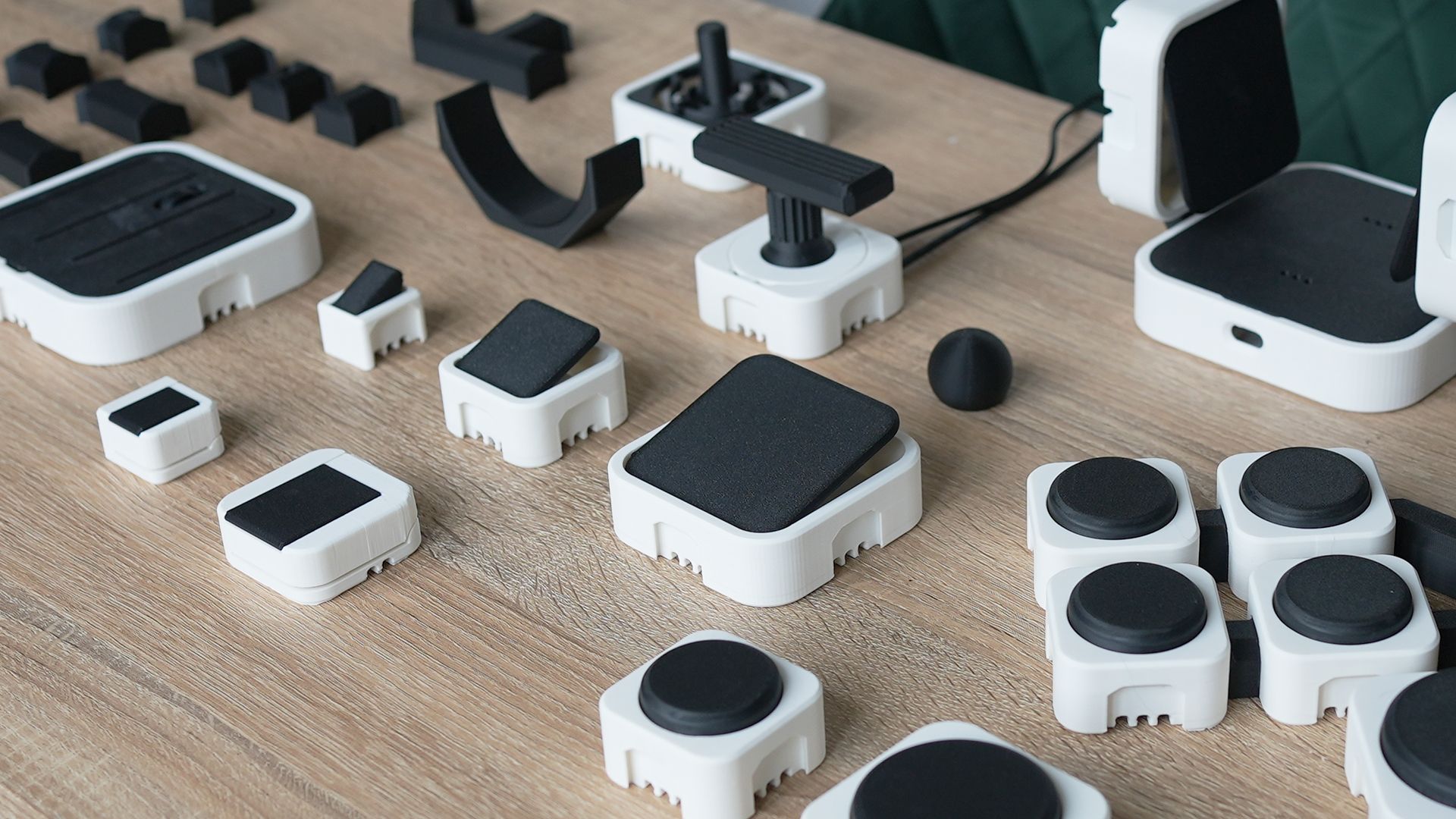
Over the past few months, we've been quietly working on a new project at PrintLab called PrintSwitch: an open-source ecosystem of 3D printed switches, controls and connectors designed to make personalised input devices and assistive technology easier to create, adapt and share. In this article, we'll give you an overview of the project, share where we've got to so far, and explain how you can get involved as PrintSwitch continues to develop. Whether it's a gaming controller, communication aid, computer access device or something entirely new, PrintSwitch provides a growing collection of modular building blocks that can be combined to create personalised solutions for different users, activities and environments.
27th July 2026 • News
Why are we building PrintSwitch?
Assistive switches are input devices that allow people with disabilities and other access needs to interact with technology. They can be used to control computers, communication devices, games, environmental controls and many other systems by converting a simple physical movement into an input.
Thanks to organisations, clinicians, makers and families around the world, countless personalised solutions are already transforming people’s lives. Every day, creative combinations of commercial products, custom adaptations and 3D printed parts are helping individuals access technology in ways that wouldn’t otherwise be possible.
While there are already many excellent solutions available, we believe there is still room to innovate in several areas:
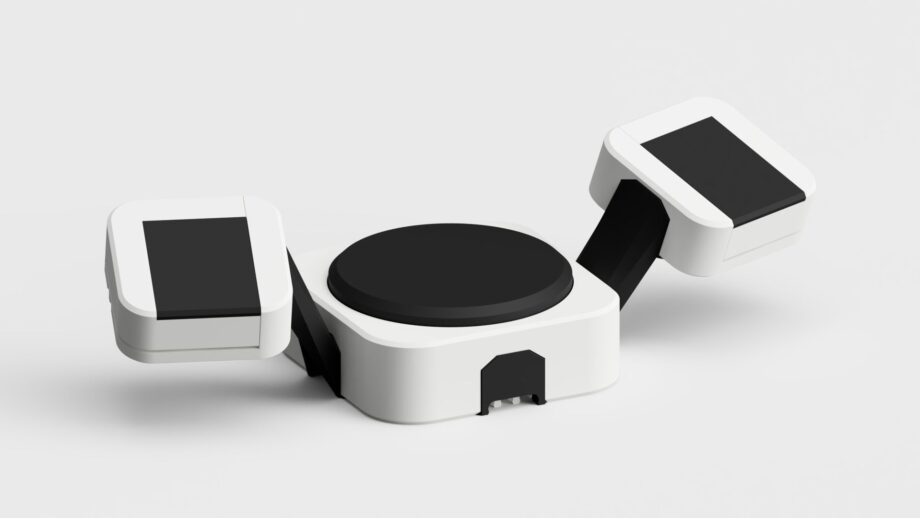
- Positioning. Many switch setups are positioned on a flat surface, but this isn’t always the most comfortable or effective arrangement. Small changes in height, angle, location or orientation can make a significant difference to comfort, fatigue and ease of use. We believe it should be easy to explore and refine different positions until the right solution is found.
- Mounting. As personalised solutions become more complex, securely mounting clusters of switches can become a challenge. Many setups rely on multiple independent mounting systems, increasing cost, complexity and setup time. We believe it should be easier to create stable, integrated configurations using fewer mounts.
- Assessment and design. Effective assessment is often an iterative process, requiring different switch types, layouts, positions and mounting arrangements to be explored before identifying the best solution. Access to this breadth of equipment isn’t always practical or affordable. We believe it should be easier to prototype, test and refine ideas before investing in a final setup.
- Product design. Personalised setups often prioritise function over form, leaving little opportunity to consider details such as cable management, modularity and overall presentation. We believe assistive products can do both, inspiring confidence, creating moments of delight and becoming something people are proud to own.
These are the challenges PrintSwitch is designed to address.
A growing ecosystem of modular building blocks
To help address these challenges, PrintSwitch is being developed as an open-source ecosystem, supported by clear documentation, example builds and educational resources that make it easier for others to create, adapt and improve personalised solutions.
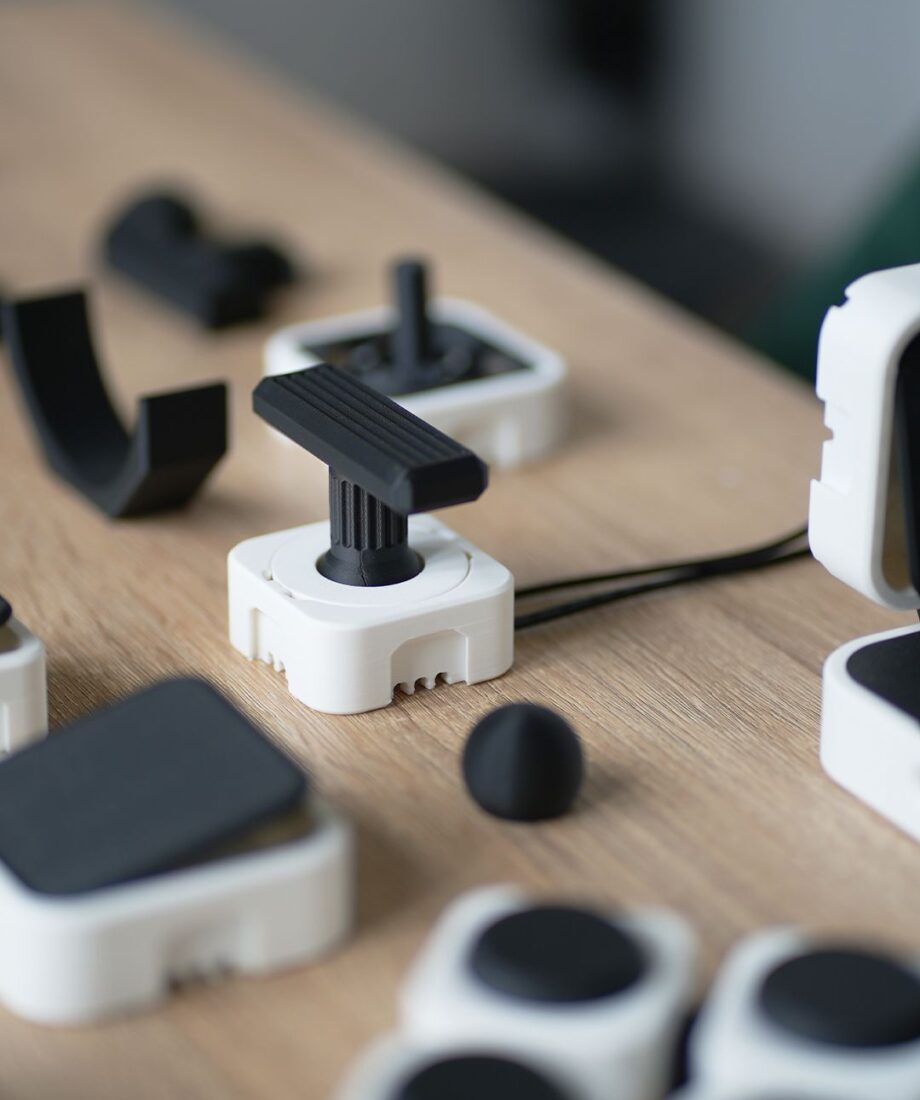
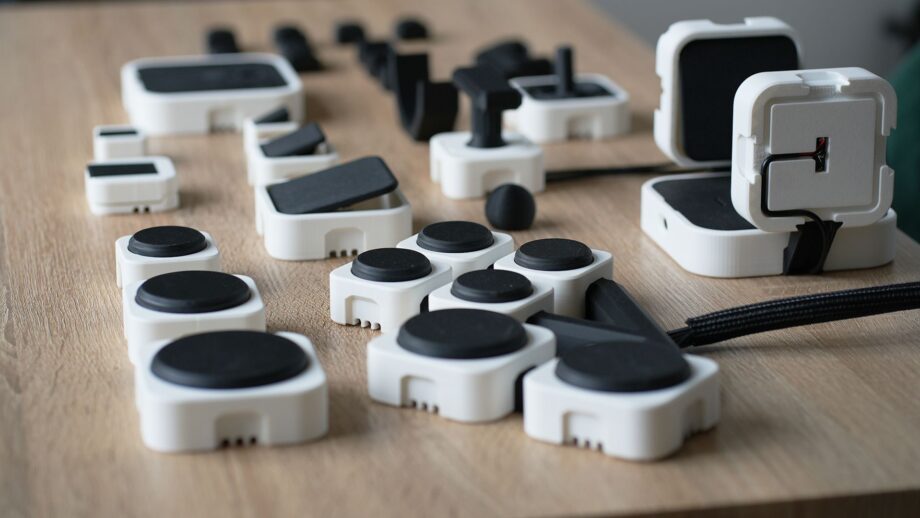
The ecosystem is built around a growing collection of modular building blocks that can be mixed, matched and reconfigured to create personalised input devices for different users, activities and environments. Each module is designed around readily available electronic components and simple soldered connections, making them straightforward to assemble, repair and customise. Modules can then be connected to widely used switch interfaces, such as the Xbox Adaptive Controller and Microsoft Adaptive Hub, using standard 3.5 mm switch inputs.
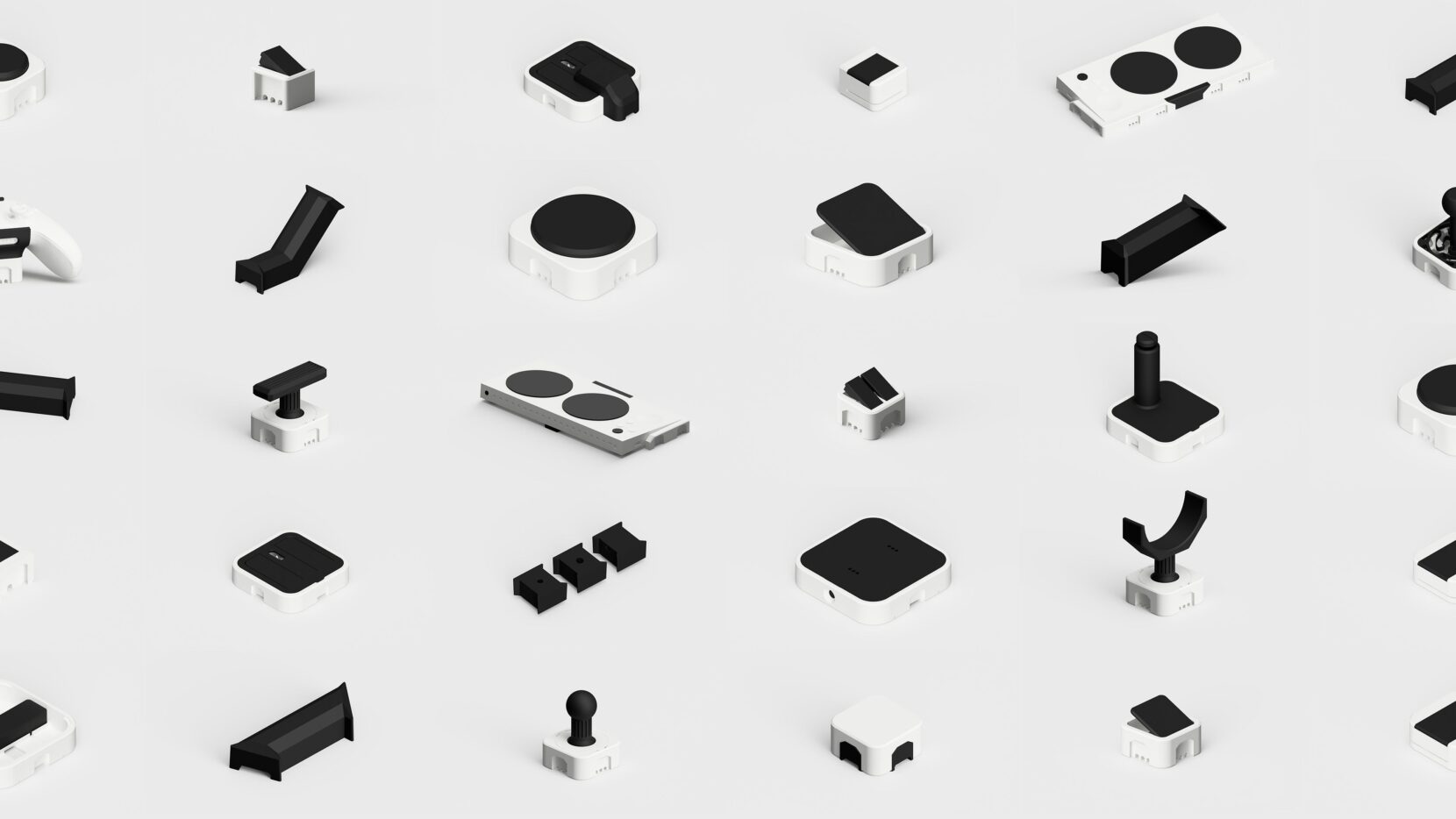
The ecosystem currently includes:
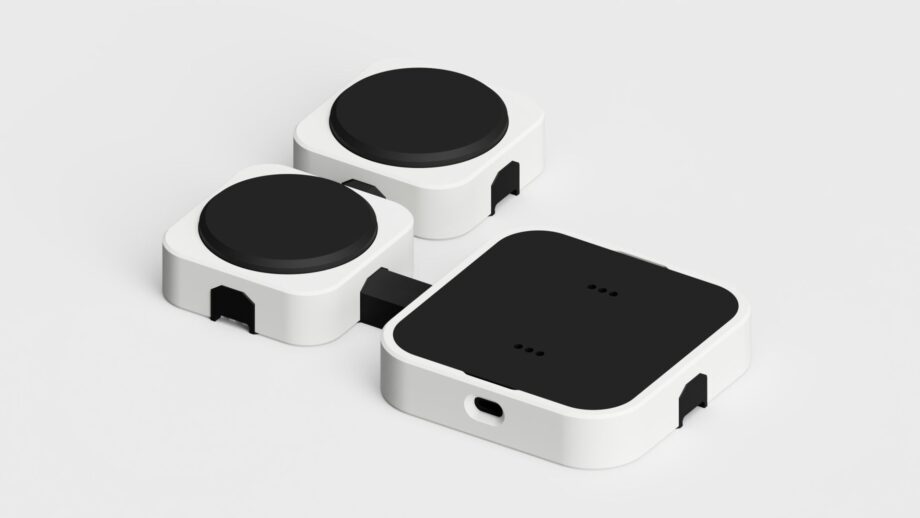
- Push switches – General-purpose switches designed for direct top-down activation.
- Angled switches – Designed for activation from a wider range of angles, including flicks, swipes and side impacts.
- Tactile switches – Designed for users who prefer firmer tactile feedback or activation using the palm, fist or elbow.
- Analogue and digital joysticks – For precise directional control and navigation.
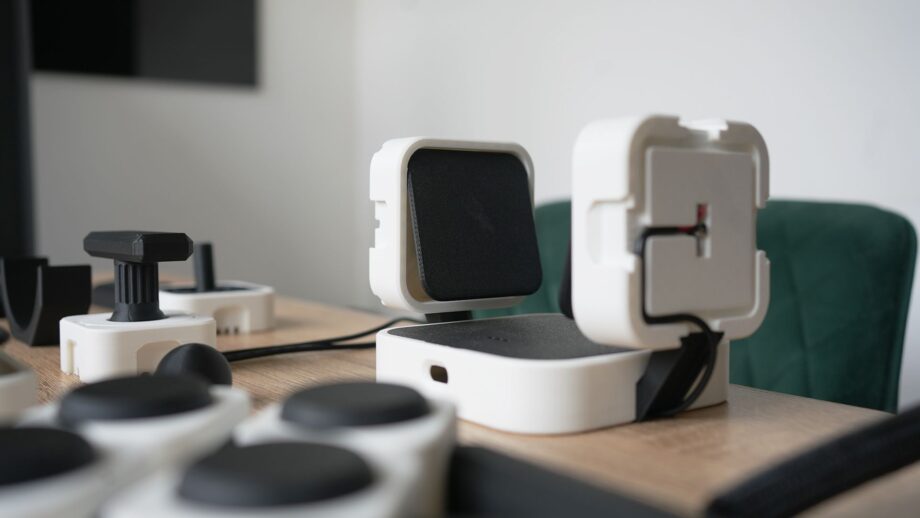
- Wireless mouse module – Based on the Bambu Lab Wireless Mouse Kit, with interchangeable grips, buttons and accessories to suit different users and activities.
- Interface docks – Integrate PrintSwitch modules with the Xbox Adaptive Controller, Microsoft Adaptive Hub and Xbox controllers.
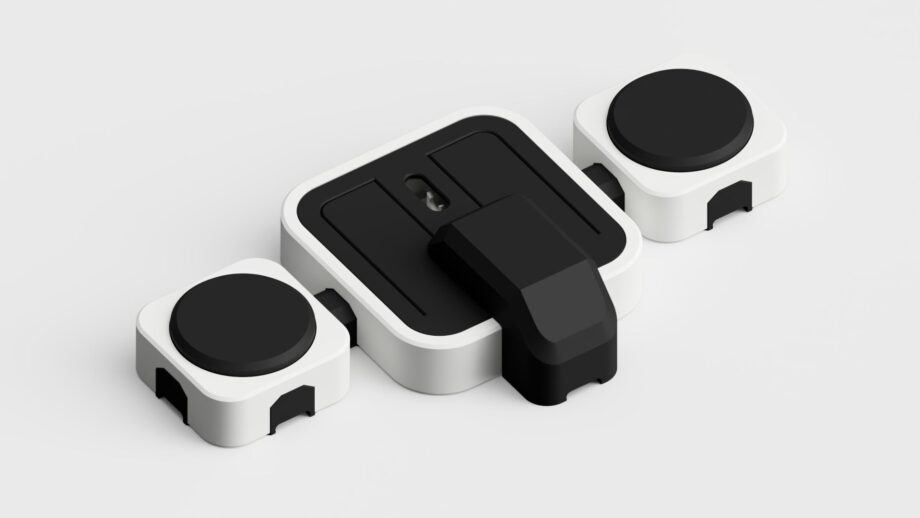
- Connectors – Join modules together using a range of straight, vertical, angled and offset configurations.
- Mounts – Secure configurations to desks, wheelchairs, tripods and other environments using velcro, screws, tripod mounts and zip ties.
Together, these modules provide a flexible toolkit for assessing, building and refining personalised assistive technology. As the PrintSwitch ecosystem continues to evolve, new modules, docks and example configurations will further expand the possibilities, enabling an even wider range of personalised solutions.
From modules to solutions
By combining different switches, connectors, mounts and interface docks, PrintSwitch modules can be assembled into a wide variety of personalised solutions. While every project is different, the design process typically follows these three steps:
- Print a selection of modules – Begin by 3D printing a selection of switches, connectors, mounts and interface docks that may be suitable for the intended application.
- Position and evaluate the modules – Explore different switch types, layouts and positions until the most effective configuration has been identified. Temporary modelling materials, such as clay or Blu Tack, can be used to quickly prototype and refine ideas before committing to a final design.
- Create an integrated build – Once the layout has been finalised, the modules are connected together using mounts and connectors tailored to the user’s needs. Simple builds may use standard connectors from the PrintSwitch library, while more complex solutions can be completed by designing custom connectors in CAD.
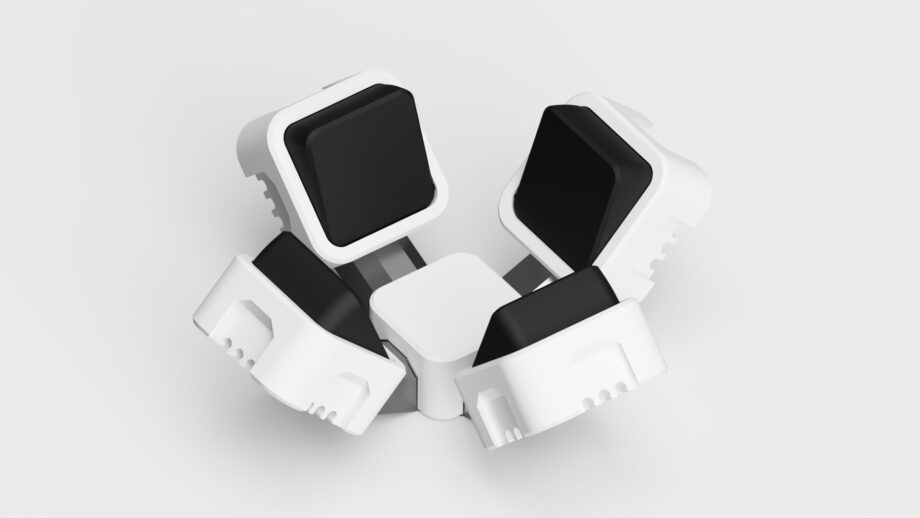
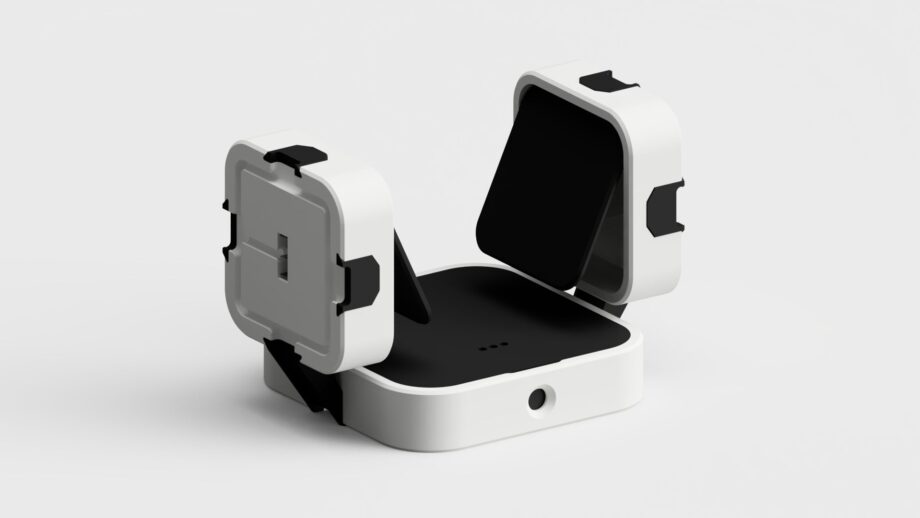
The concepts below illustrate just some of the ways the ecosystem can be used to create devices for gaming, communication, computer access and other applications.
Where we are and what’s next
PrintSwitch is still in the early stages of development, but the core ecosystem is beginning to take shape. Over the past few months, we’ve designed a growing collection of switches, connectors, mounts and interface docks, and have begun gathering feedback from organisations including Makers Making Change and Everyone Can. Additional organisations are already lined up to evaluate the ecosystem over the coming months. Over the next phase of the project, we’ll be focusing on several key areas:
- End-user collaborations. We’ll be working alongside a small number of people with disabilities to design personalised setups around real accessibility needs. These collaborations will help us evaluate the ecosystem in real-world scenarios, refine existing modules and better understand how PrintSwitch can support different users and applications.
- Open-source release. As the ecosystem matures, we’ll begin releasing PrintSwitch as an open-source project. This will include individual modules, example builds and maker guides to help others print, assemble, adapt and further develop personalised solutions.
- PrintLab Course. We’re also developing a new PrintLab course that teaches the complete process of designing personalised PrintSwitch solutions. Combining user assessment, positioning, ergonomics and CAD design, the course will guide participants through real-world case studies, showing how custom modules, connectors and complete builds can be developed around an individual’s specific needs. While the PrintSwitch hardware and design files will remain open source, the course will be available to PrintLab subscribers, helping to support the continued development of the project.
- Organisation partnerships. We’ll be working with organisations across education, healthcare and assistive technology to encourage the adoption of PrintSwitch, helping more makers, clinicians and educators create personalised solutions using the ecosystem.
Get involved and register your interest
We’d love to connect with more people who are interested in PrintSwitch, whether you’re looking for a personalised solution, exploring PrintSwitch within your organisation, interested in volunteering your time or skills, or simply want to follow the project’s development.
Complete the short form below to tell us a little about yourself and how you’d like to get involved. As PrintSwitch develops, we’ll use this information to contact you about opportunities that are most relevant to your interests, whether that’s testing new designs, collaborating on projects, organisational partnerships, volunteering or future learning resources.
We’re excited to see where PrintSwitch leads over the coming months and look forward to working with a growing community of makers, therapists, educators, organisations and end users to help shape its future!