What 3D Printers are Schools Using in 2026
As part of a recent survey, we asked schools in the PrintLab community what 3D printers they are currently using in 2026, along with the factors influencing their purchasing decisions. The results revealed a rapidly evolving landscape, with clear growth in classroom print farms, strong adoption of newer desktop machines, and continued diversity across brands and setups.
11th May 2026 • News
About the Study
- The survey was completed by approximately 168 schools and educators within the PrintLab community.
- Most responses came from educators working with students aged approximately 10–18, with a smaller number of universities, colleges, libraries, and makerspaces also participating.
- Participants represented 24 countries, although the majority of responses came from the United States. As a result, the findings may reflect US classroom trends more strongly than some other regions.
- The results should not be viewed as a complete representation of the wider education market, as the data reflects the PrintLab community and was self-reported by participants.
- Several new machines have only recently entered the market, including the Bambu Lab X2D and Bambu Lab P2S. As a result, many schools may still be in the process of evaluating or adopting these newer systems.
Let’s get into the results!
Most Popular 3D Printer Brands
As part of the survey, participants were asked to list the 3D printer brands currently being used at their school or organisation. The chart below shows the percentage of participants that reported each brand within the survey.
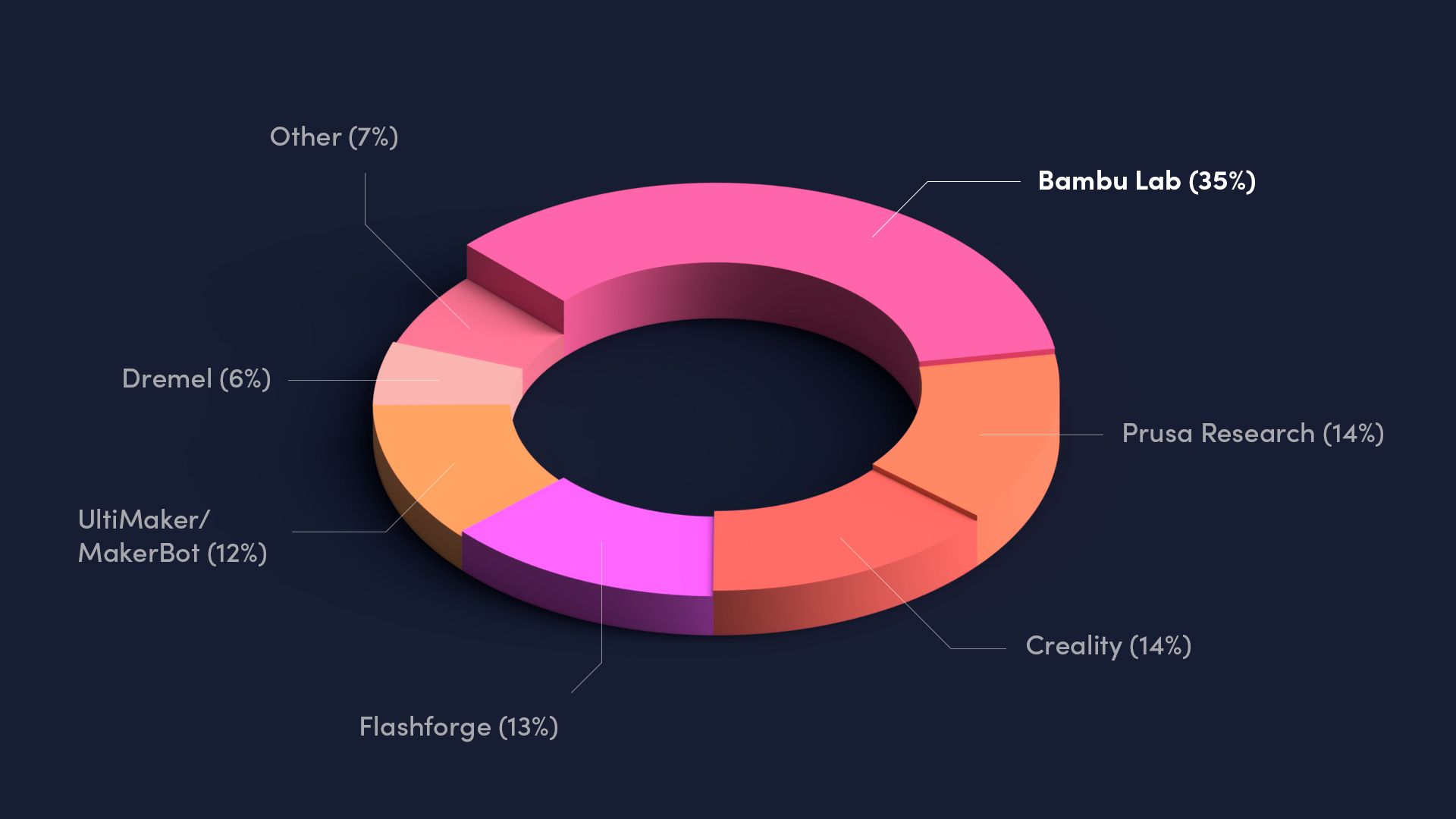
Bambu Lab was the most commonly reported brand among participating schools, reflecting the company’s rapid growth within education environments over the past few years. At the same time, the results showed a highly diverse market, with many schools operating mixed-brand setups that include a combination of newer machines alongside long-established classroom printers from brands such as UltiMaker, MakerBot, Prusa Research, Creality, and Flashforge.
Most Popular 3D Printer Models
As part of the survey, participants were asked to list the 3D printer models and quantities currently being used at their school or organisation. The chart below highlights some of the most commonly reported models within the survey dataset.
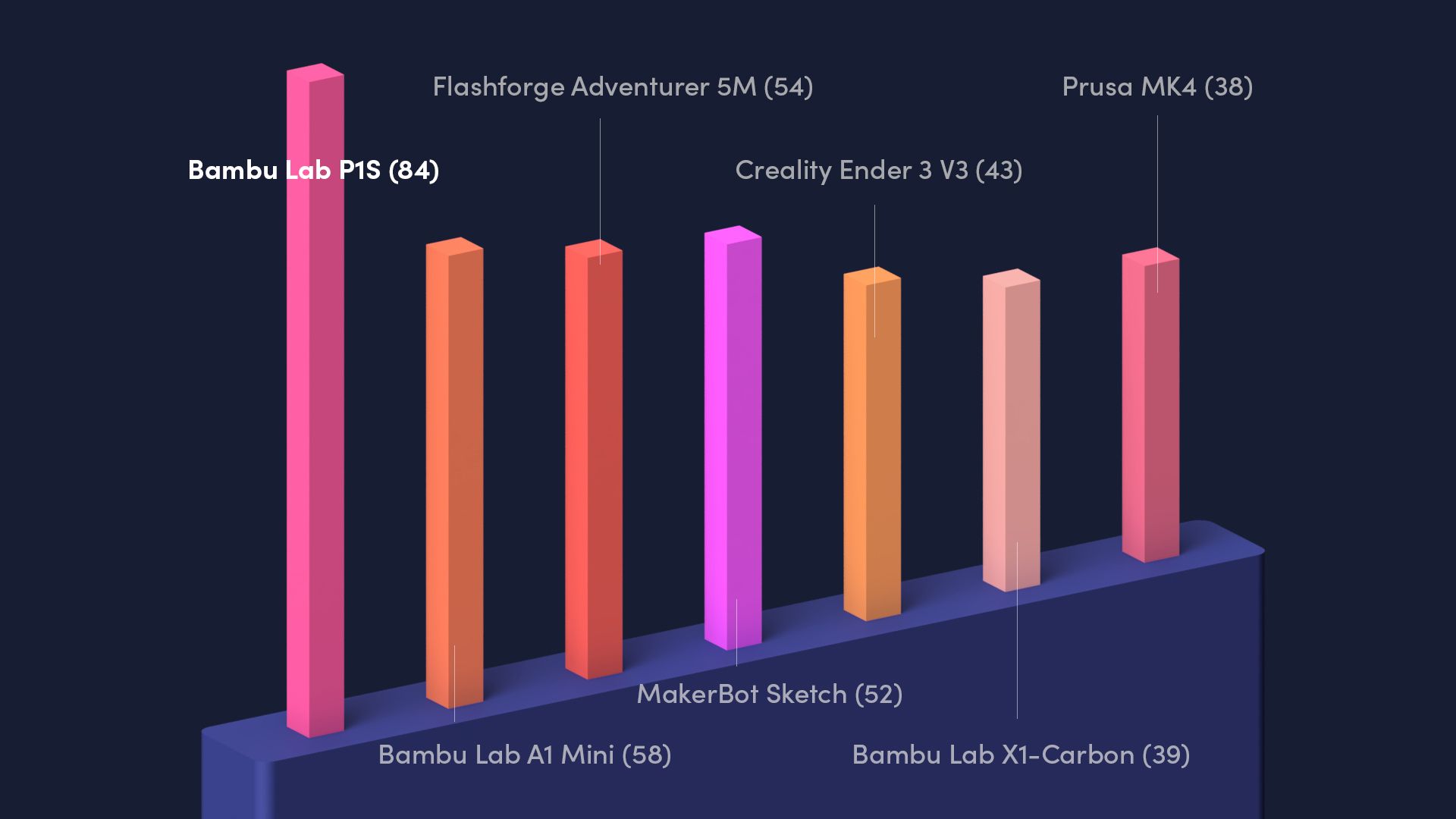
The Bambu Lab P1S was the most commonly reported model overall with 84 machines reported, followed by the Bambu Lab A1 Mini (58) and Flashforge Adventurer 5M (54). Interestingly, all three machines are relatively affordable desktop printers, with the P1S also offering an enclosed design that may appeal to classroom environments focused on safety, reliability, and ease of use. With the Bambu Lab P2S only recently entering the market as the successor to the P1S, we wouldn’t be surprised to see it become one of the leading classroom machines in future surveys.
Classroom 3D Printer Fleet Sizes
As part of the survey, participants were asked to report the total number of 3D printers they currently have at their school or organisation. The chart below groups responses into different fleet sizes to help illustrate the scale of classroom and makerspace setups within the survey.
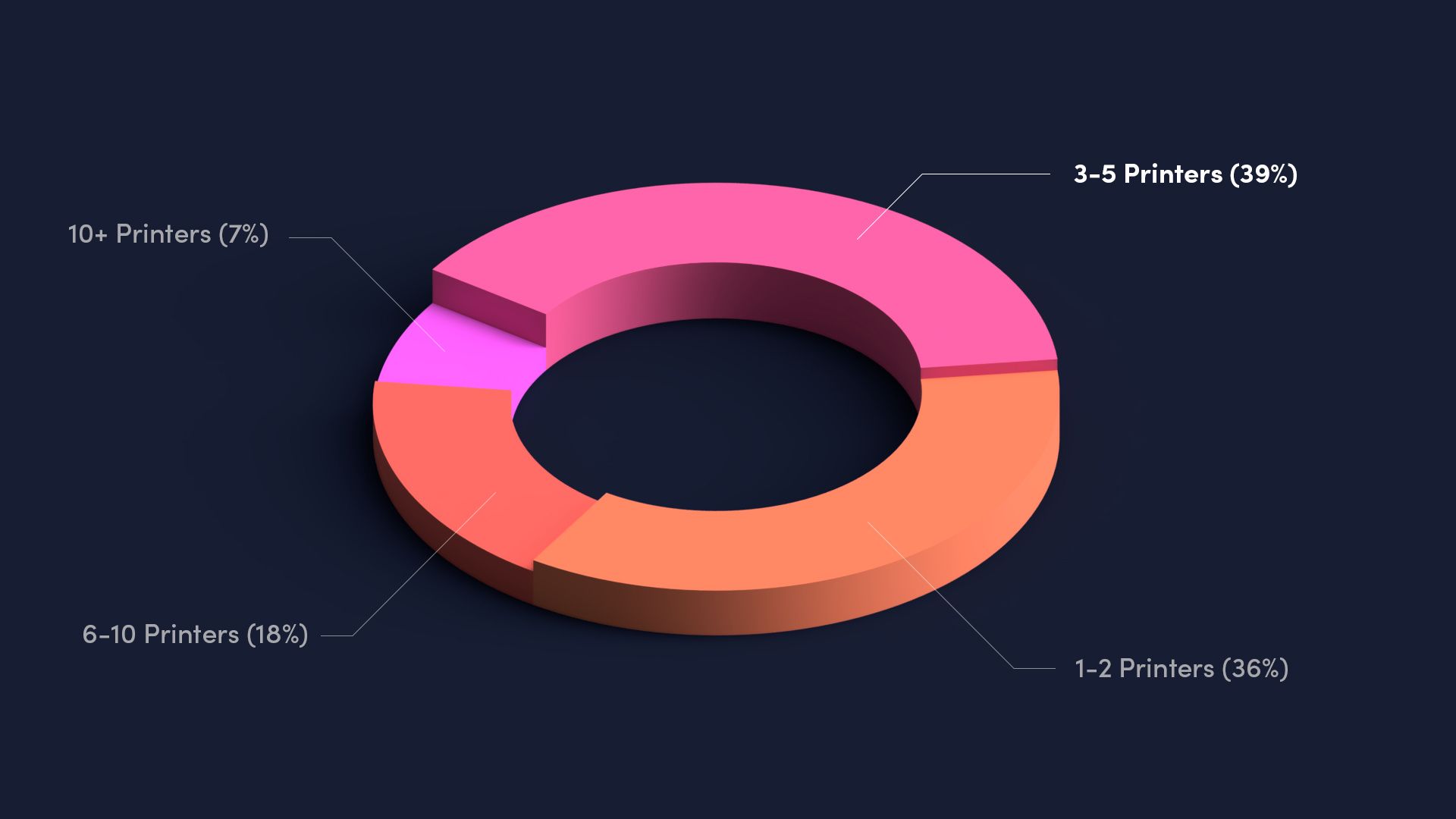
The most common setup size reported was 3–5 printers, closely followed by schools with 1–2 printers. While many participants reported larger print farms with 6–10 or even 10+ machines, it was interesting to see that smaller setups still remain extremely common, suggesting there is still significant room for growth in classroom 3D printing adoption and capacity over the coming years.
Favourite 3D Printer Features
As part of the survey, participants were asked what their favourite 3D printer is and why. We then analysed the written responses and grouped them into common themes. The chart below shows the percentage of responses that mentioned each feature or benefit.
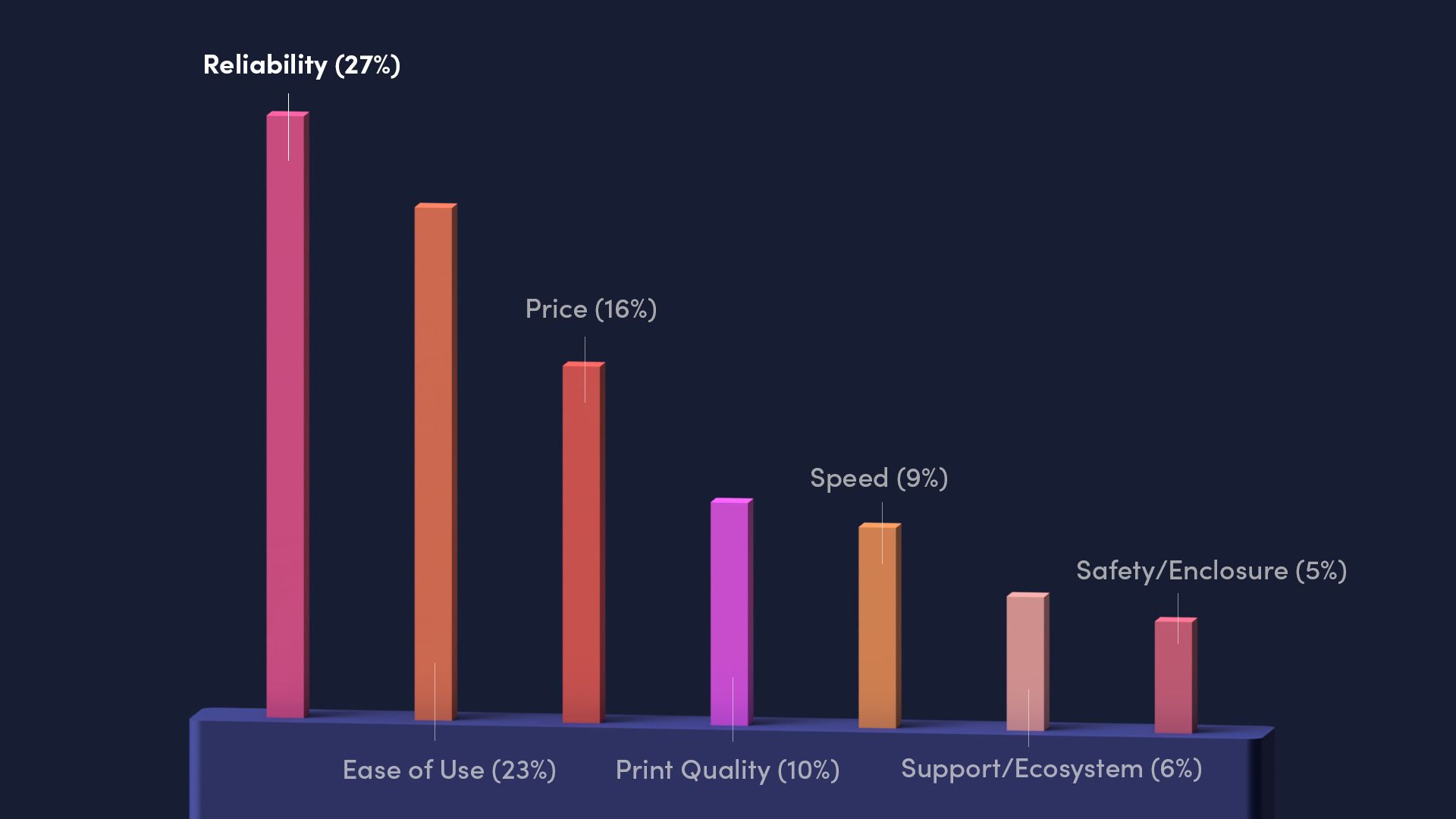
Reliability, ease of use, and affordability emerged as some of the most commonly mentioned themes across responses. Interestingly, even with many recent innovations in desktop 3D printing, particularly around multi-material systems and advanced features, educators still most frequently valued machines that are dependable, easy to manage, and consistent in day-to-day classroom use.
Final Thoughts
It’s exciting to see how rapidly 3D printing continues to evolve within education. From small classroom setups to large print farms, the survey revealed a wide range of approaches, budgets, and technologies being used to support hands-on learning.
We’d like to say a huge thank you to everyone who participated in the survey and shared their classroom setups with us. We hope you found the results interesting and helpful, and we’re looking forward to seeing how the landscape continues to evolve over the next few years.
PrintLab Site License Giveaway
As part of the survey, we also offered a random giveaway for a PrintLab Site License. Congratulations to Jenny Dhami from Summerhill School in the UK! We’ll be reaching out shortly with details on how to activate the license.
Thanks again to everyone who participated!